
{主关键词}
使命召唤
“四轮”加速驶向“双足”!三大新势力同日密集释放具身机器人信号_我的网站

一 |
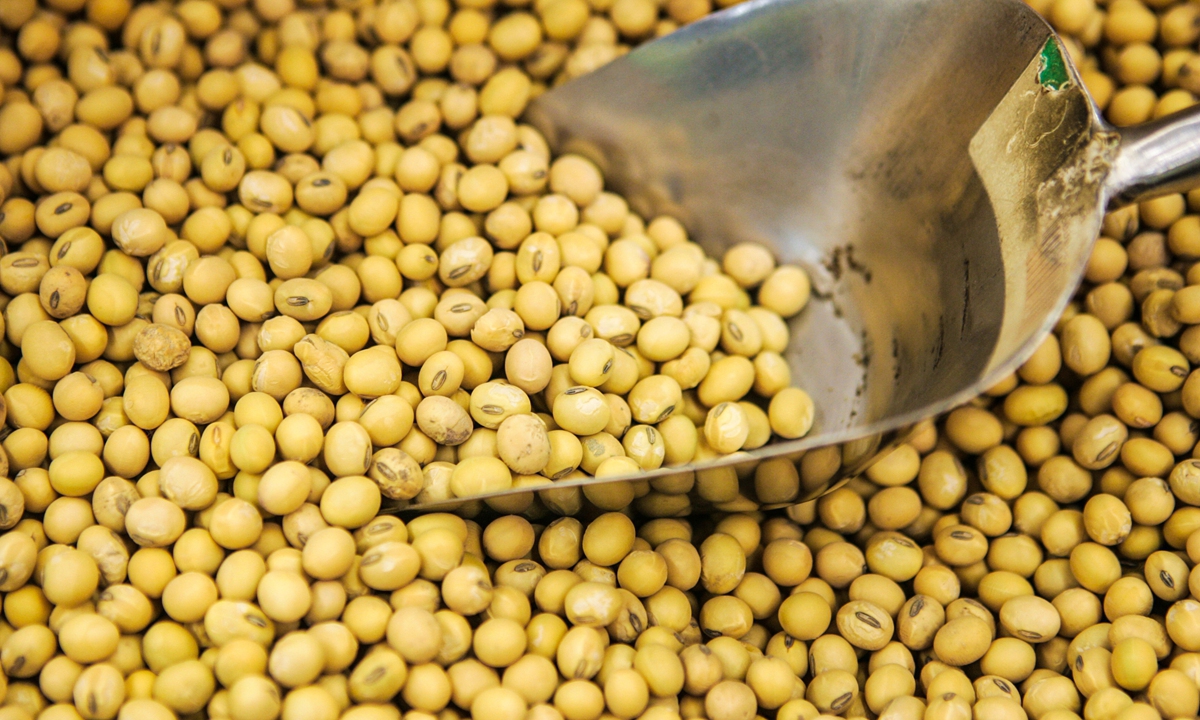
China continues to be the leading destination for Brazilian soybeans, and the Brazilian soybean industry wants to further deepen this relationship, expecting historically high volumes in the coming months, the Brazilian Association of Soybean Growers (Aprosoja Brasil) told the Global Times on Friday.
Brazilian soybean exports to China have remained very strong. China imported 12.08 million tons of soybeans from Brazil in June, up 13.7 percent year-on-year, while imports from the US fell 20.9 percent year-on-year to 1.27 million tons, according to data from the General Administration of Customs.
China imported 34.75 million tons of soybeans from Brazil during the period, up 9.1 percent year-on-year, according to Aprosoja Brasil. "Based on arrivals and customs clearance in China, there was clear growth," the association said.
According to the official data platform Brazilian Comex Stat, which records shipments at origin, 48.32 million metric tons were destined for China from January through June, largely unchanged from 48.41 million metric tons during the same period in 2025.
The difference between the two datasets mainly reflects timing and methodological differences between the recording of departures, cargoes in transit, arrivals and customs clearance.
Aprosoja Brasil said that the broader economic conclusion is the same: "Trade flows remained historically strong, China continued to be the leading destination for Brazilian soybeans, and Brazil's total soybean exports reached a first-half record of 69.57 million metric tons."
For farmers, strong export volumes help support the marketing of the crop, although record exports do not automatically mean record farm margins, said the Brazilian industry association.
China is the world's largest soybean importer. Imported soybeans are mainly used for oil production and animal feed. In terms of trading partners, China mainly imports soybean-related products from Brazil, the US, Argentina, Uruguay and Canada.
Brazil ranks among the world's leading soybean producers and exporters, with China being its largest export market for soybeans, according to the Xinhua News Agency.
Commenting on the significance of the Chinese market, Aprosoja Brasil said "China is absolutely strategic to Brazil's soybean industry," citing data showing that in 2025, China purchased 85.4 million metric tons, representing approximately 79 percent of all Brazilian soybean exports.
The two countries also have a highly complementary trade relationship. For Brazilian farmers, Chinese demand provides scale, market liquidity and greater capacity for long-term planning, said the Brazilian soybean industry association. For China, Brazil offers large, competitive and reliable supplies, as well as a crop calendar that complements production in other supplying countries.
Previously, policy shifts, such as US unilateral tariff measures, have caused disruption for US soybean farmers and other agricultural producers, Lü Xiang, research fellow at the Chinese Academy of Social Sciences, told the Global Times.
At the same time, China has been diversifying imports, including from Brazil and Argentina, to reduce risks from trade uncertainty, according to Lü.
Aprosoja Brasil noted that this partnership should not be seen merely as a temporary consequence of trade disputes involving third countries. Instead, it is a structural and mutually beneficial relationship, based on the complementarity between Brazil's production capacity and China's large demand for food, animal feed and protein, the industry group said.
Looking ahead to the soybean trade for the rest of the year, Aprosoja Brasil said that they are positive, while having a prudent mindset. Brazil has completed the harvest of a record soybean crop of approximately 180.6 million metric tons, and Brazilian soybean exports are expected to reach 116.3 million metric tons in 2026, which would also be a record, the association said.
"Brazil therefore has sufficient supply to continue serving the Chinese market strongly in the coming months... We expect historically high volumes, although not necessarily growth every single month, because soybean trade is seasonal and Northern Hemisphere supplies become more prominent during the second half of the year," it said.
。 在“四轮”智能电动后,下一场关于机器人的产业竞争在汽车业愈演愈烈。8月24日当天,包括小鹏、零跑和蔚来在内的三家新势力车企,密集释放了各自进入具身智能机器人赛道的相关信息。 8月24日,小鹏集团官方宣布,小鹏机器人业务完成首轮超9亿美元融资,投后估值超63亿美元(约430亿元人民币),刷新中国具身智能行业单轮私募股权融资纪录。

二 | “小鹏人形机器人IRON计划在2026年底进入量产阶段,从小鹏的门店和园区开始落地商业场景应用,并于2027年面向中国及海外市场正式上市和交付。”小鹏集团表示,通过本轮融资,小鹏机器人业务获得清晰的市场化估值,也将加速小鹏机器人量产及小鹏物理AI模型的研发迭代,推动高阶通用人形机器人迈向全球商业化应用新阶段。“本轮募集资金主要用于小鹏机器人业务的软硬件研发、物理AI模型训练迭代、高质量数据采集、全链条量产基地建设及全球商业化拓展。” 同日,零跑汽车管理层在2026年中期业绩会上表示,新能源车企,尤其是具备全域自研能力的新能源车企,是最具备做具身智能机器人的企业之一。

三 | 针对市场关注的机器人业务进展,零跑汽车确认,“公司对此已有规划,机器人相关信息不久后将对外披露。” 跃跃欲试的还有蔚来汽车。

四 | 8月24日市场消息称,蔚来智驾负责人任少卿创立具身智能公司,蔚来将对其进行战略投资。对此,接近蔚来管理层的业内人士向财联社记者表示,蔚来长期关注AI前沿技术,以自主研发与开放合作并重的方式进行产业布局。

五 | 近年来,蔚来在芯片、操作系统等关键技术领域持续投入并取得关键进展,同时通过战略合作、产业协同等方式围绕具身智能、算法模型、智能硬件、新能源与算力基础设施等方向持续支持创新企业发展。 至此,理想、小鹏、蔚来及零跑汽车四家头部新造车企业,已齐聚智能机器人赛道。 相比新势力,传统主机厂的脚步更快。8月中旬,广汽集团孵化的人形机器人公司广东慧仑科技宣布完成超亿元融资,由中车国创基金、招银国际、四川科创等机构联合投资。

六 | 几乎同一时期,广汽资本领投了机器人力传感器企业蓝点触控数亿元D轮融资。此外,中国一汽董事长、党委书记邱现东在8月21日的中国一汽2026年科技大会上,明确将突破L4自动驾驶技术、具身智能机器人技术等十大重点技术任务。 “我们自主设计开发了全部的原生硬件平台和软件体系。整个(机器人)供应链企业也有 85%以上与当前的小鹏汽车重合。所以我们非常相信,最终小鹏的机器人成本竞争力在行业里面肯定是领先的。”小鹏集团董事长何小鹏在公司2026年中期业绩会上表示,当前国内机器人BOM成本通常为汽车的2.5-3倍,而小鹏IRON身定位在通用类型集成,“我相信它具有非常广阔的定价空间,其硬件毛利会大幅高于当前我们汽车业务的毛利。” “车企布局人形机器人,具备成本、效率、技术的三重优势。”在业内人士看来,汽车产业成熟的供应链体系、制造工艺与成本控制能力,正加速向机器人领域迁移,这种跨产业协同有望推动减速器、伺服系统等关键零部件降本提质,在提升整机可靠性的同时,进一步放大产业链整体需求,“人形机器人正在被车企视为智能化能力的下一块试验田。” 摩根士丹利研报显示,到2036年全球人形机器人保有量将达2440万台,2050年升至10亿台,对应市场年收入达7.5万亿美元;中国2050年累计保有量约3亿台,占全球总量约30%。人形机器人产业有望逐步从B端工业场景向C端消费市场渗透,成为下一个万亿级新兴赛道。 “未来能够持续生存的汽车企业大多会进入机器人行业。

七 | ”奇瑞汽车执行副总裁、墨甲机器人总经理张贵兵表示,汽车企业往往拥有数万名研发工程师,其中相当一部分是软件工程师,人才和工程能力天然可以向机器人延展。“具身智能机器人当下正在进行工业场景匹配,第一个阶段的应用会是在物流领域,物流场景会比整个汽车的装配领域更容易匹配。” (文章来源:财联社)。
Current article:http://3ipsi.yuejinhuapennuochoudengying.cyou/news/20260826_5806099.html
Published on:20:18:07
- 19265iOS 16.1候选版本发布:引入iCloud共享照片图库 实时活动支持第三方App
- 291对话“苹果税”举报人:美国都免佣了,为何还收中国30%?
- 23771ROG Xbox Ally X20开始预订
- 4438926王星已与女友见面,称所在大楼至少关押50人!泰警方表示调查中其还不能离泰
- 9903国足国际排名仍暂列亚洲第11位
- 964623记者:莱奥只想去加拉塔萨雷,他已经拒绝了热刺和维拉的报价
- 28245全球首款双架构CPU!IBM同一核心原生跑Arm和Z:2nm、5.7GHz
- 553瑞士国有铁路计划开发“空中出租车”:最多5名乘客
- 82474追梦格林调侃萧华:詹姆斯去76人还能打圣诞大战
- 3078531午后拉涨!安踏上半年大赚近百亿元
- 61603“结构不稳、根本不安全”,特朗普政府:如果肯尼迪中心无法获准关闭两年进行翻修,未来可能考虑拆除该建筑
- 898522亿元收购案,刚开始就“黄”了,A股芯片公司:好聚好散,股价年内已涨超70%
- 8610政声直达丨河北新能源货运发展规模稳居全国前列
- 397未来三年,Facebook将投资3亿美元帮助全球新闻机构。
- 819994惊险!两名中国游客在泰国租车险被卖到缅甸,被特种部队拦截后获救
- 1560895常州通报星宇股份劝退应届生:107人解除劳动合同 协商简单生硬
- 779葱哥一旦被抓将自动发布《GTA6》 R星会服软吗?
- 686当20系列移动图形卡到达时,雷神如何玩?
- 7134(乡村行·看振兴)三代人与一颗青椒 见证山西长子农业变迁,(乡村行·看振兴)三代人与一颗青椒 见证山西长子农业变迁
- 1077981Kashgar-Khujand international passenger route gets more frequent flights
- 135419【透视社·绿色发展】生物多样性保护在行动
- 835年内银行罚没近13亿!2129张罚单中500万以上大额罚单达21张,“双罚制”常态化
我的网站热门国内
- Copyright @ 2016-2017 我的网站 版权所有