

本站推荐电影
-
·China’s latest COVID-19 wave begins to ease after peaking in mid-August: CDC
·OPPO K10x 将于9月16日正式发布_闪充_机型
·投票:支付宝引领生物识别ISO国际标准的发展。
·福州市中心将添4.5公里快速路
·被投诉“没穿衣服”:发布 31 周年之际,微软分享 Win95 更换全息防伪标签背后故事
·印度谈中印实力:两国实力对等,印度空军优于中国空军,再战必胜,吃瓜玩游戏,原创 印度谈中印实力:两国实力对等,印度空军优于中国空军,再战必胜
·贪污横行、分赃不均、党争加剧,泽连斯基政权开始“大乱斗”
·景区茶农盼建农用轨道、御街原住民惧夜经济打扰……西湖“长大”了 你最关心的是什么?
·老詹经纪人:哈登提前看清快船局势选择离开 必须为这手操作点赞
·UK Gov’t Tables No-Confidence Motion in Itself With UK's Johnson ‘to Open Debate’ on 18 July
·梅根哈里的伪王室之旅,激怒了查尔斯威廉,但要对付“耍无赖”很难
·度小满维鲁斯,恶意扣款99
·경찰 '무작위 배당' 도입…전국 경찰서에 수사심사관 배치
·手慢就明年提车?小米YU7将于6月26日上市 23.59万起售不可以?
·周杰伦模仿者档期已经排到明年 网友戏称“日结杰伦”
本站推荐电视剧
-
·红米红米注7洞壳实手图
·离谱!中国籍女子被拒绝入境马来西亚后,竟公然夺ICA官员的枪
·Vaa Vaathiyaar Faces Fresh Legal Roadblock Ahead of Scheduled Release
·湖人大概率送出哈迪与克内克特 谋求得到库明加
·今年第18号台风“沙德尔”生成!最新路径预测
·从“工具”到“搭档” AI应怎样助力科研,从“工具”到“搭档” AI应怎样助力科研
·神剧情!C罗半场被换下,十人胜利下半场连扳三球上演3-2惊天逆转
·CCG+自走棋新品亮相!雷霆游戏正式代理《大圣牌:凌霄斗神
·加拿大掀桌子,“对美国不抱幻想”!卡尼宣布:鉴于美国对价值200亿美元加拿大商品征收50%关税,加拿大等额报复性关税9月8日正式生效执行
·Jaideep Ahlawat on Why Sequels Are Complex at Filmfare OTT Awards 2025 Press Conference
·【观点】正信期货:内外现货维持升水,铜价高位偏强震荡
·处暑近 农事忙
·自助彩票机成“提款机”?3人利用系统漏洞狂盗220多万
·党心照耀童心 探索科技之光——北京小学红山分校科技节
·嫦娥五号月壤矿物中,我国科学家发现了......_嫦娥五号月壤中发现存在高含量水_分析
电影下载排行
-
·俄克拉荷马电价上调案受审:15%申请压到1%,居民仍在先付11美元
·东亚杯还有必要继续存在吗
·人形机器人爆火背后:资本如何判断长期价值?
·国家发展改革委召开“六网协同”协调推进工作会,研究“六张网”投融资机制和支持政策
·名记:科尔希望库明加提升组织能力 做到快速阅读比赛&减少停球
·Boris Johnson Accuses India of 'Arbitrability' Detaining Alleged Sikh Separatist for Over Four Years
·Windows10最适合下载深色墙纸:“经典XP”极乐,海滩夜跑
·中网优能无提醒扣费,未享权益,盼全额退款
·王楚钦遭闪光灯干扰!到场边指着观众怒吼
·可以打开和出售Microsoft Office 365
·SEO优化之服务器篇—如何选择服务器?
·7月末长三角地区本外币各项存款余额92.14万亿元 同比增长8.9%
·对话重庆直播卖烧烤为先心病儿筹款的单身母亲:暂拒后续捐助,政府已在协助
·中国男排主教练吴胜:解决“发接发”,备战世锦赛
·赵发庆:队员们的身体状态很疲惫,我们做好了困难的准备
电视剧下载排行
-
·LASK林茨队史首次晋级欧冠正赛,奥地利参加欧冠正赛第五队
·Lisa of BLACKPINK to Make Film Debut in Action Movie Extraction: Taigo
·多地有雷阵雨或阵雨,局地有暴雨,最高温36℃,河北最新出行信息请查收→
·纳达尔鼓励阿尔卡拉斯:希望没受伤,接下来的赛事全力以赴
·数智技术赋能河北数字经济高质量发展学术交流会在石家庄举行
·字母哥亲述交易心路:离开雄鹿最怕失去球迷的爱
·Mississippi Judge Rejects Abortion Clinic Challenge of ‘Trigger Law’ After SCOTUS Ruling - Reports
·三星电子、SK海力士计划下半年增加对英伟达8层HBM4内存供应量
·今年1至7月,我国高技术产业吸引外资同比增长32.7%
·“肉盘子”里乾坤大——看山东诸城如何做大做强畜牧产业
·台风“简拉维”已在福建泉州登陆
·存储、网络和苹果!知名投行揭秘:年尾AI交易三大关键词 六大推荐股
·乌兰察布一地突发山洪,一辆车过漫水桥时被水冲走,车内5人已确定4人死亡,1人正在搜救
·India logs 2,786 new Covid cases
·湖北建始老电厂变身文旅新地标,开业一周上演浪漫之约
龙的传人
-
发布时间:2026-08-26
海边的曼彻斯特
China issues 7 alerts in a row as Typhoon Dolphin makes landfall in Zhejiang_我的网站

A |
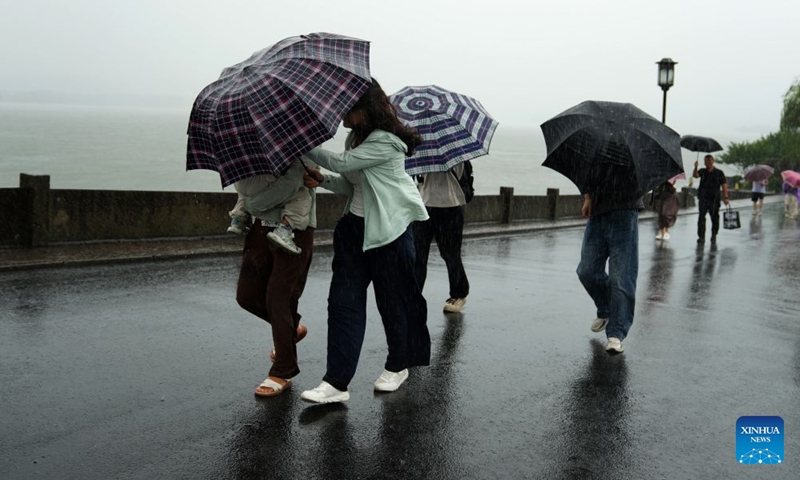
China issued seven weather and disaster alerts at 6:00 pm on Sunday after Typhoon Dolphin made landfall in Taizhou, East China's Zhejiang Province, including a red typhoon warning, an orange rainstorm warning and a red flash flood warning.
Typhoon Dolphin, the 13th of the year, landed in Taizhou, East China's Zhejiang Province at 5:30 pm on Sunday as a severe typhoon, packing maximum winds of 42 meters per second near its center and a minimum central pressure of 945 hectopascals, according to National Meteorological Center (NMC).
After making landfall, Dolphin continued moving westward. The storm is forecast to gradually weaken as it shifts northwestward at a speed of 15-20 kilometers per hour.
The NMC warned that from Sunday evening to Monday evening, heavy to torrential rains are expected in multiple parts of provinces and regions including Zhejiang, Shanghai, and Anhui in Eastern China, and Henan, Hubei in Central China, and some other regions in southern China. Some areas in eastern and central Zhejiang, southern Anhui and other regions could see extreme rainfall of up to 250-420 millimeters.
Authorities also warned of secondary risks, including flash floods, flooding of small and medium-sized rivers, urban waterlogging, severe convective weather and geological disasters. The Ministry of Water Resources and the China Meteorological Administration jointly issued a red flash flood warning, saying parts of eastern and southern Zhejiang face a high risk of flash floods.
The Ministry of Natural Resources and the China Meteorological Administration issued an orange geological disaster risk alert, urging local governments to strengthen monitoring and emergency response, while advising residents in high-risk areas to evacuate according to local arrangements.
The typhoon also brought strong winds, with areas near its path expected to experience winds of up to force 13-14 and gusts reaching force 15-16.
According to statistics, August sees the highest number of typhoons generated and making landfall in China each year. The NMC forecast that in the next 10 days, one to two typhoons may form over the northwestern Pacific or the South China Sea, with a relatively low likelihood of affecting China's coastal areas, per CCTV News.
Global Times
。
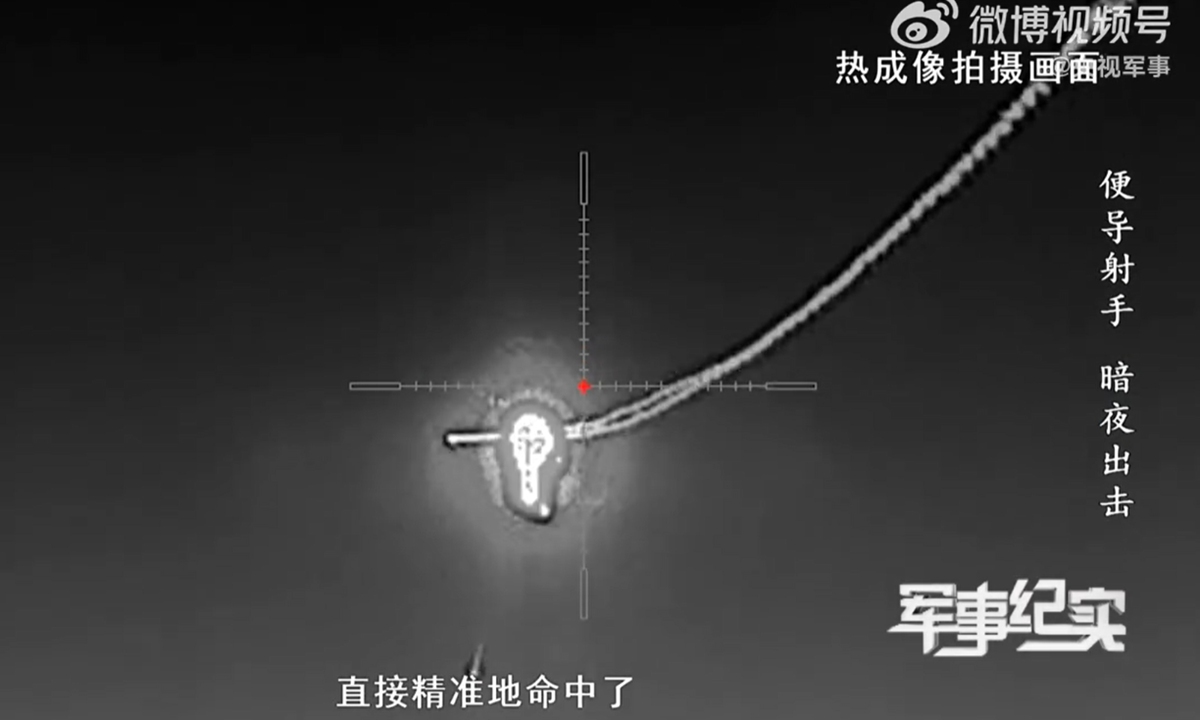
An expert said this example demonstrates the PLA's capability to counter high-value targets with low-cost equipment through systematic coordination, noting this tactic would be a good addition to the broader system of the PLA's anti-stealth capabilities.
During the live-fire verification exercise featured in the CCTV News military channel video, teams conducted coordinated firing using man-portable air-defense systems (MANPADS) and HQ-16 air defense missiles. The HQ-16 engaged the majority of incoming targets, leaving the stealth fighter to the portable missiles.
The video explained that in real combat, large air defense missiles are mostly radar-guided, but radar has difficulty detecting stealth fighters, which is precisely why stealth aircraft can operate with near impunity. Portable missiles, however, use infrared guidance that tracks heat sources, which can actually increase the probability of detecting such targets.
The use of infrared guidance to strike stealth aircraft also drew attention in early 2026. In March, Iran reportedly shot down an F-35 fighter, with analysis suggesting that Tehran likely used infrared detection technology to hit the aircraft, challenging the myth of the F-35's stealth invincibility.
However, using portable missiles to shoot down stealth fighters is no easy task, said the CCTV video. Due to their much shorter range compared with large air defense missiles, the operators must quickly move to positions where the stealth fighter is likely to appear and launch the missiles when the aircraft is closest to them.
Moreover, this type of engagement requires extremely high synchronization between the two operators. Since portable missiles are infrared-guided and highly sensitive to heat sources, if the launches are not synchronized, the later missile might lock onto the earlier one as a target, the video explained.
The video noted that the two operators had been conducting synchronization training and are now fully ready. Upon command, two missiles streaked across the night sky and simultaneously struck the target drone with precision.
The portable missile unit's flawless performance marked the completion of its first experimental tactical exercise, making it possible to use portable missiles against stealth fighters on future battlefields, commented the video.
This coordinated drill demonstrates that through proper coordination within the air defense system, low-cost equipment can indeed unlock new combat value and pose a certain counterbalance to high-value stealth targets, Song Zhongping, a Chinese military affairs expert, told the Global Times on Sunday.
To detect stealth targets, the HQ-16 field air defense system requires multiple detection units to conduct continuous, uninterrupted scanning of the same direction. This multi-static array deployment can exploit loopholes in stealth, such as the fact that stealth is not omnidirectional. Therefore, making use of multi-directional detection can increase the probability of finding a target. Portable missiles, meanwhile, serve as an important supplement to the radar-guided system. The combination of the two can indeed engage stealth targets, Song explained.
Song also noted that this shows the mature nature of the PLA's data link and information fusion systems. However, as the video shows, this is no easy feat, it requires a high degree of coordination and skilled operational techniques.
The expert also emphasized that using portable missiles against stealth fighters is just one part of the PLA's anti-stealth system. There are other non-MANPADS infrared-guided missiles and other guidance mechanisms that also contribute to anti-stealth capabilities.
Anti-stealth capability development is a multi-channel, multi-dimensional systems engineering effort. At the detection level, in addition to multi-band radar deployment, other technical approaches include passive radar, lidar and future quantum radar, all of which can effectively detect and lock onto stealth targets. Meanwhile, airborne early warning aircraft represent another critical component of the PLA's anti-stealth capability, providing surveillance and command guidance over a wider airspace, Song said.
This multi-dimensional integrated anti-stealth capability is a key direction for future air defense system development, Song added.
。

B |
Current article:http://3ipsi.yuejinhuapennuochoudengying.cyou/jl4nw/x4ppwt.html
Published on:10:53:44
下载地址2:点击进入迅雷高速下载 温馨提示:邀请好友一起下,可提高下载速度,若遇无法下载,可另选时间尝试或重装软件!
下载方法:安装软件后,点击即可下载,谢谢大家支持,欢迎每天来!